
Delivering Computer Science Foundation Programs for Lancaster University
Lancaster University
As Programme Lead at Lancaster University Leipzig, I ran the two Computer Science foundation routes, pre-bachelor and pre-master, from 2023 to 2024. With seven lecturers and 55 students, I turned ad hoc delivery into one shared way of working. Student satisfaction rose from 50% to 90% within one academic cycle.
The Challenge
When I joined, each module ran its own way. There was no shared planning or documentation, lecturers worked in silos, and handovers and assessments did not line up from one module to the next. Students noticed: satisfaction sat at 50%.
My Role
I owned both accredited routes, delivered with Navitas, and kept them aligned to UK academic standards and German regulatory requirements. The job was to give delivery a structure it had not had before, with shared standards for the teaching team and regular reviews to keep them in place.

Leading the Team
I led seven lecturers and hired four of them. With a team that size, consistency depends less on any one lecturer than on everyone working from the same plan, so most of my effort went into making that plan easy to follow.
The shared module templates and grading criteria gave every lecturer, new or not, the same starting point. A weekly review gave the whole team one place to raise problems before they reached students.
What I Did
I started with planning and handovers. Every module got a shared template, and assessments, grading criteria, and course documentation followed one standard across both routes, so a lecturer taking over a module knew where things stood.
Assignments, feedback, and lecturer coordination moved into digital workflows on Moodle and Microsoft 365. The teaching team planned in Agile cycles, with the work tracked in Asana.
Results
- Student satisfaction rose from 50% to 90% within one academic cycle, across 55 students on the two routes.
- Grading overhead dropped by about 40% once grading ran through Agile planning and Asana tracking.
- Handovers between lecturers improved, because planning, documentation, and delivery reviews followed one shared standard.
Teaching Computer Ecosystems
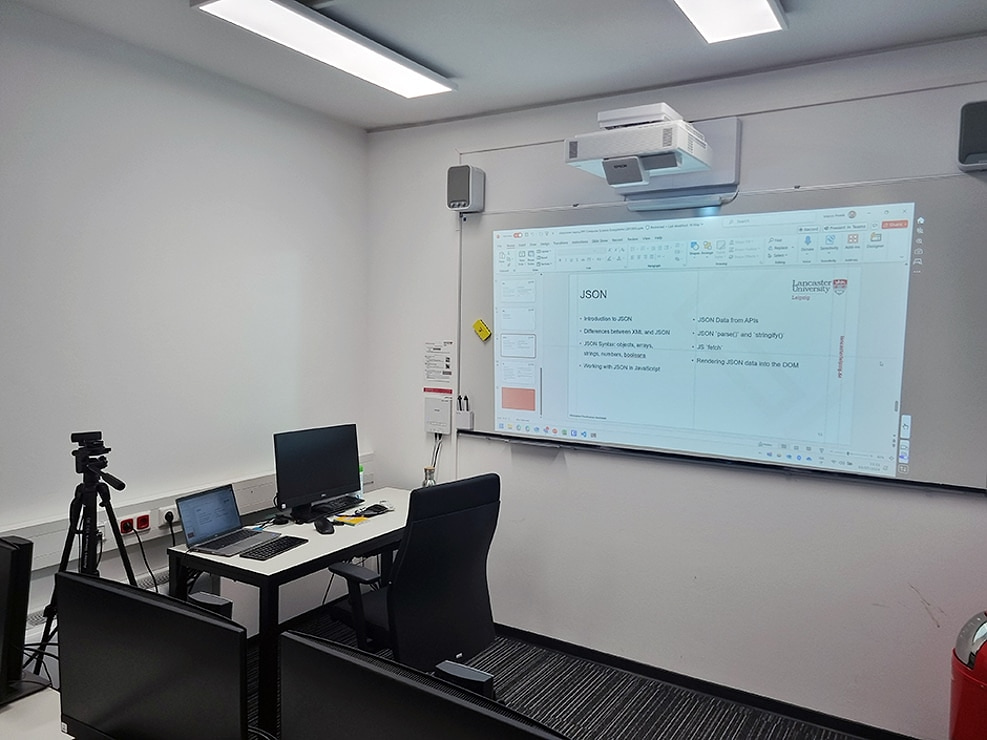
Alongside running the programme, I taught the Computer Ecosystems module. It covered the web foundations students needed before starting a Computer Science degree: HTML, CSS, JavaScript, Git, SQL, and Bash.
I prepared the lectures, kept the course files in one Git repository with a folder per week, and reviewed and graded the code students submitted.
What I Learned
Structured planning only helps when ownership is explicit: a shared template works only if someone keeps it current. Hiring four of the seven lecturers also taught me to build the standard into how new people start.
Teaching and grading the module myself kept me close to the students. It showed me quickly when a grading criterion was unclear, which is hard to see from a planning board.
The same pattern later shaped how I run marketing websites: many contributors, one shared system, and a regular review. On parcelLab's marketing site, that meant one board for every team and production blocks instead of one-off pages.